
Client centricity in IT services means redesigning every touchpoint around your business needs rather than forcing you to adapt to rigid service models. When your IT provider truly operates client-centrically, you’ll notice immediate differences: support teams who already know your infrastructure before you call, proactive solutions deployed before problems impact operations, and technology recommendations that align with your growth trajectory instead of vendor quotas.
The distinction matters because traditional IT service delivery operates on standardized packages and reactive ticket systems that treat every client identically. Client-centric providers instead invest time understanding your industry challenges, business objectives, and operational constraints. This translates into customized solutions that integrate seamlessly with your existing workflows, dedicated support available around the clock when you need it, and strategic technology guidance that positions IT as a business enabler rather than a cost center.
For IT decision-makers, this approach directly impacts your bottom line through reduced downtime, faster issue resolution, and technology investments that deliver measurable ROI. You’re not purchasing generic service level agreements; you’re partnering with experts who measure success by your business outcomes. The difference becomes evident during critical moments when personalized knowledge of your systems prevents minor issues from becoming major disruptions, and when strategic planning sessions focus on your competitive advantages rather than upselling unnecessary features.
Understanding client centricity helps you evaluate potential IT partners and recognize whether providers genuinely prioritize your success or simply market themselves that way.
Defining Client Centricity in IT Services

Beyond Customer Service: The Client-Centric Difference
Many organizations claim to offer excellent customer service, but client centricity operates on an entirely different level. While traditional customer service typically responds to issues as they arise, a client-centric approach actively works to prevent problems before they impact your operations. This fundamental distinction transforms the service relationship from reactive troubleshooting to proactive partnership.
In practice, client centricity means your IT provider invests time in understanding your specific business workflows, growth objectives, and industry challenges. Rather than applying one-size-fits-all solutions, they customize their approach to align with your unique requirements. When a server issue occurs at 2 AM, a client-centric provider doesn’t just fix the immediate problem—they analyze why it happened and implement measures to prevent recurrence, all while keeping you informed through personalized communication.
The difference becomes evident in how providers anticipate your needs. A client-centric IT partner monitors your systems continuously, identifying potential bottlenecks before they affect productivity. They reach out with recommendations for upgrades based on your business trajectory, not just their product catalog. With 24/7 support availability, they ensure someone who understands your specific environment is always accessible when urgent situations arise.
This approach treats each client’s challenges as genuinely unique rather than ticket numbers in a queue. Your success metrics become their success metrics, creating a collaborative relationship where technology solutions directly support your business goals rather than existing as a separate function.
The Shift from One-Size-Fits-All Solutions
Traditional IT service models have long operated on the assumption that standardized solutions work for everyone. Businesses were expected to adapt their workflows and processes to fit whatever package a provider offered. This one-size-fits-all approach often left companies struggling with tools that didn’t quite meet their needs, paying for features they’d never use, or missing critical functionalities specific to their operations.
Client-centric IT providers flip this model entirely. Instead of forcing businesses into rigid packages, they begin with discovery—taking time to understand your specific challenges, growth objectives, and operational requirements. A retail business with multiple locations has vastly different network security needs than a professional services firm with remote workers. A healthcare practice faces compliance requirements that don’t apply to a manufacturing company.
This customized approach benefits organizations of all sizes. Small businesses gain access to enterprise-level solutions scaled appropriately for their budget and needs, without unnecessary complexity. Mid-sized companies receive strategic guidance as they grow, with technology that evolves alongside them. Larger enterprises get specialized support for complex, multi-location environments.
The difference becomes clear in implementation. Rather than deploying generic configurations, client-centric providers design solutions around how you actually work. They consider your existing systems, your team’s technical comfort level, and your future plans. This personalized service extends beyond initial setup—with 24/7 support teams who understand your unique environment and can respond quickly when issues arise. The result is technology that genuinely enables your business rather than creating new obstacles.
Core Principles of Client-Centric IT Services
Personalization Over Standardization
Client-centric IT providers recognize that no two businesses operate identically, which is why personalization takes precedence over one-size-fits-all approaches. Rather than deploying standardized packages, these providers invest time in comprehensive discovery sessions to understand your specific operational workflows, compliance requirements, budget constraints, and long-term business objectives.
This assessment process examines multiple dimensions of your organization. Industry-specific regulations and security standards shape the infrastructure recommendations. Current technology gaps and pain points inform immediate priorities. Growth projections influence scalability planning, ensuring solutions expand alongside your business without requiring costly overhauls.
The result is a customized IT roadmap that aligns technology investments with business outcomes. A healthcare practice receives HIPAA-compliant solutions with patient data protection at the forefront. A retail business gets point-of-sale integration and inventory management tailored to seasonal fluctuations. A professional services firm benefits from collaboration tools optimized for remote teams.
This personalized approach extends beyond initial implementation. Client-centric providers offer 24/7 support that understands your unique environment, reducing resolution times and minimizing disruptions. They proactively monitor your systems, adjusting strategies as your needs evolve. This ongoing partnership ensures your IT infrastructure remains a competitive advantage rather than a operational burden.
24/7 Support as a Standard, Not a Premium
In a truly client-centric IT service model, 24/7 support isn’t an expensive add-on—it’s the foundation. Your business challenges don’t conveniently pause at closing time, and neither should your IT partner’s commitment to resolving them.
Consider the reality: system outages at 2 AM can halt operations, security breaches demand immediate attention regardless of the clock, and your team members working across different time zones need assistance when they’re actually working. A client-centric provider recognizes that IT availability directly impacts your business continuity and revenue.
Offering round-the-clock support as standard demonstrates a fundamental understanding that your success depends on reliable, always-accessible technical expertise. This approach shifts the focus from profit-maximizing through tiered service packages to genuinely serving your operational needs.
When evaluating IT partners, examine whether 24/7 support comes standard or requires premium pricing. Providers who gate-keep essential availability behind higher price tiers prioritize their revenue model over your business requirements. Client centricity means your IT partner stays available because your business demands it, not because you’ve paid extra for the privilege. This distinction reveals whether a provider truly puts clients first or simply claims to.
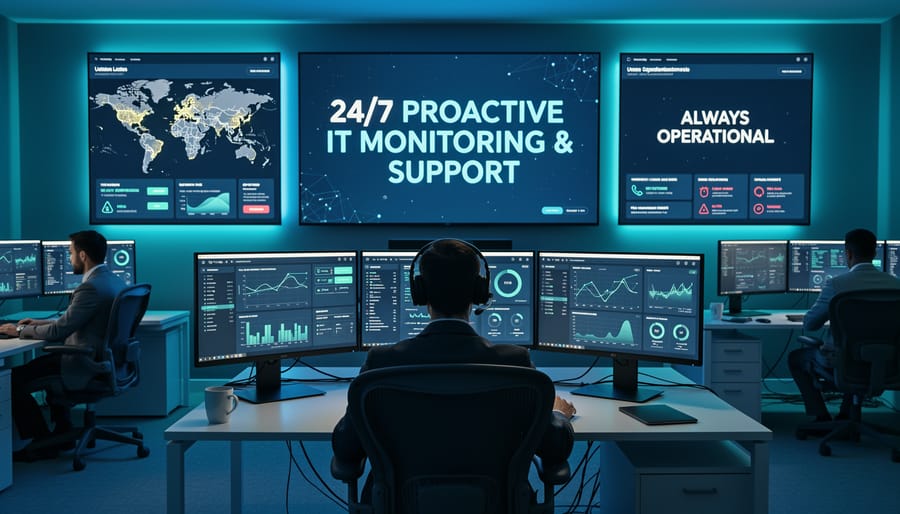
Building Relationships, Not Transactions
Client centricity transforms how IT service providers engage with businesses. Rather than viewing each service request as an isolated transaction, a client-centric approach focuses on cultivating long-term partnerships built on trust and mutual success.
This means your IT provider takes time to genuinely understand your business objectives, industry challenges, and growth trajectory. They proactively anticipate your evolving technology needs before problems arise, functioning as a strategic advisor who helps shape your technology roadmap rather than simply responding to tickets.
A true partnership approach involves regular strategic reviews, personalized recommendations aligned with your specific goals, and solutions designed around your unique operational requirements. Your provider should maintain detailed knowledge of your infrastructure, understand your risk tolerance, and offer guidance that considers both immediate needs and future scalability.
This relationship-focused model delivers tangible benefits: reduced downtime through proactive monitoring, faster issue resolution because your provider knows your systems intimately, and technology investments that truly support business growth. With personalized service backed by 24/7 support, you gain a trusted technology partner invested in your success, not just a vendor processing service requests.
How Client Centricity Transforms IT Service Delivery
Customized Cloud Solutions for Diverse Business Needs
Client-centric cloud providers recognize that no two businesses operate identically, which is why they reject the one-size-fits-all approach to infrastructure design. Instead of forcing organizations into predefined service tiers, these providers conduct thorough assessments of your specific workloads, performance requirements, and growth projections to architect solutions that truly fit your operational reality.
This customization extends to compliance requirements, which vary significantly across industries. Healthcare organizations need HIPAA-compliant environments, while financial services require different security protocols. A client-centric provider designs infrastructure with these regulatory frameworks built in from the ground up, rather than treating compliance as an afterthought or expensive add-on.
Budget constraints receive equal consideration in the design process. Rather than presenting you with premium packages that exceed your needs or budget, client-focused providers work backward from your financial parameters to deliver maximum value. They help identify which workloads belong in public versus private cloud environments, where reserved instances make sense, and which services genuinely drive business outcomes versus those that simply increase monthly bills.
This personalized approach, supported by 24/7 technical guidance throughout implementation, ensures your cloud infrastructure becomes a strategic asset aligned with business objectives rather than a generic commodity service.

Adaptive Network and Security Configurations
Client-centric network and security configurations recognize that a healthcare provider faces vastly different threats than a retail business, and a five-person startup requires different solutions than a 500-employee enterprise. Rather than deploying one-size-fits-all firewalls and network architectures, personalized IT services begin with understanding your industry’s regulatory requirements, common attack vectors, and specific vulnerabilities.
For financial services clients, this means implementing multi-layered security protocols that address compliance mandates while maintaining transaction speed. Manufacturing operations might require segmented networks that protect intellectual property while enabling IoT device connectivity on the production floor. Small businesses benefit from scalable security frameworks that provide enterprise-grade protection without enterprise-level complexity or cost.
The configuration process involves analyzing your operational patterns—peak usage times, remote work requirements, data flow characteristics—to optimize both performance and protection. This tailored approach extends beyond initial setup. With 24/7 support monitoring your specific environment, security protocols evolve as your business grows and threat landscapes shift. The result is network infrastructure and security measures that align precisely with how your business actually operates, protecting what matters most to your organization while supporting, rather than hindering, productivity.
Right-Sized Communication Systems
Client-centric communication systems are designed around your actual business needs, not vendor assumptions. Rather than implementing oversized phone systems with unused features, a personalized approach begins with analyzing your call volume patterns, peak usage times, and team communication workflows. This means a five-person office receives a fundamentally different telephony solution than a fifty-person operation, even within the same industry. The configuration matches reality: appropriate line capacity, relevant features like call forwarding or conferencing based on how your team actually collaborates, and scalability that grows with genuine demand rather than speculative projections. This right-sized methodology eliminates paying for unused capacity while ensuring reliability during your busiest periods. When issues arise, 24/7 support ensures communication continuity regardless of business hours. The result is a communication infrastructure that fits like a tailored suit, delivering the capabilities you need without the complexity and cost of features you don’t, while maintaining the flexibility to adapt as your communication patterns evolve.
The Business Impact of Choosing Client-Centric IT Partners
Reduced Downtime Through Proactive Support
Client-centric IT providers understand that every minute of system failure directly impacts your bottom line, which is why they prioritize prevention over reaction. Rather than waiting for problems to escalate, these partners continuously monitor your infrastructure, identifying potential vulnerabilities before they cause disruptions. Through regular system health assessments, automated alerts, and proactive maintenance schedules, client-focused providers can address issues during planned maintenance windows instead of emergency situations.
This preventative approach significantly reduces the cost of downtime for businesses. Advanced monitoring tools combined with personalized service mean your provider understands your specific operational patterns and can anticipate problems unique to your environment. With 24/7 support availability, issues detected outside business hours receive immediate attention, preventing minor concerns from becoming major outages. This proactive stance transforms IT support from a reactive expense into a strategic investment that protects productivity and revenue.
Cost Efficiency Through Right-Sizing
Client-centric IT providers conduct thorough assessments of your actual business requirements before recommending solutions, which directly impacts your bottom line. Rather than offering one-size-fits-all packages, personalized service means you receive infrastructure scaled precisely to your needs. This approach prevents costly over-provisioning—paying for server capacity, software licenses, or bandwidth you’ll never use—while simultaneously avoiding over-provisioning that leads to budget waste. Equally important, right-sizing eliminates under-provisioning scenarios where insufficient resources create performance bottlenecks, system downtime, and lost productivity. Your IT partner should continuously monitor your usage patterns and business growth, proactively adjusting resources as your needs evolve. This ongoing optimization, supported by 24/7 support teams who understand your specific configuration, ensures you’re investing IT dollars where they deliver maximum value rather than subsidizing unused capacity or scrambling to address gaps.
Scalability That Grows With Your Business
True client centricity means your IT partner doesn’t just solve today’s challenges—they architect solutions that scale alongside your growth trajectory. A client-centric approach involves understanding your three-year and five-year business objectives, then designing flexible infrastructure that expands without requiring costly overhauls or service interruptions.
Rather than locking you into rigid systems, these partners implement modular solutions that adapt as your team grows, your data requirements increase, or your operations expand to new locations. They proactively monitor your usage patterns and recommend upgrades before bottlenecks impact productivity. This forward-thinking strategy includes regular consultations to reassess your evolving needs, ensuring your technology investment continues delivering value at every stage of your journey.
With personalized service and 24/7 support backing these scalable solutions, you gain the confidence that your IT infrastructure will support—not limit—your ambitions.
Identifying a Truly Client-Centric IT Service Provider
When evaluating potential IT service providers, distinguishing genuine client centricity from marketing rhetoric requires a systematic approach. Look beyond polished websites and sales presentations to assess how providers actually operate.
Start by examining their discovery process. A truly client-centric provider invests significant time understanding your business before proposing solutions. They ask probing questions about your workflows, growth plans, pain points, and organizational culture—not just your technical specifications. If a provider offers solutions during the first conversation without this thorough assessment, that’s a clear warning sign.
| Evaluation Area | Client-Centric Indicators | Red Flags |
|---|---|---|
| Initial Consultation | Detailed business assessment, questions about goals and challenges, customized discovery process | Generic questionnaires, immediate product pitches, one-size-fits-all recommendations |
| Solution Design | Tailored proposals aligned with business objectives, scalability considerations, budget flexibility | Cookie-cutter packages, pressure to adopt unnecessary features, rigid pricing models |
| Support Structure | 24/7 availability, dedicated account management, proactive monitoring and maintenance | Limited hours, ticket-only support, reactive-only service model |
| Communication | Regular check-ins, transparent reporting, plain-language explanations, accessible team members | Technical jargon without context, infrequent updates, hard-to-reach contacts |
Request specific examples of how they’ve customized solutions for clients with similar needs. Client-centric providers readily share detailed case studies demonstrating personalized service rather than generic success stories. Pay attention to whether they emphasize relationships or just transactions in these examples.
Evaluate their support philosophy carefully. Providers committed to client centricity offer 24/7 support because they understand technology issues don’t respect business hours. They assign dedicated contacts who learn your environment rather than routing you to different technicians each time. Ask about their average response times and escalation procedures—vague answers suggest support isn’t truly prioritized.
Finally, assess their willingness to adapt. Client-centric providers view agreements as starting points for partnership, not rigid contracts. They should demonstrate flexibility in adjusting services as your needs evolve and show genuine interest in your long-term success rather than just the initial sale.
In today’s competitive business landscape, client centricity has evolved from a buzzword to a fundamental requirement for successful IT partnerships. Organizations of all sizes—from growing startups to established enterprises—benefit significantly when their IT service provider prioritizes understanding unique business challenges and delivering tailored solutions rather than one-size-fits-all packages.
The difference between a client-centric IT partner and a traditional vendor becomes evident in daily operations: proactive communication instead of reactive troubleshooting, customized strategies aligned with your business goals rather than generic service bundles, and genuine relationship-building that extends beyond contract terms. When your IT provider truly understands your industry pressures, workflow requirements, and growth objectives, technology becomes an enabler rather than an obstacle.
As you evaluate your current IT partnerships, ask yourself whether your provider demonstrates genuine client centricity through personalized attention, flexible solutions, and round-the-clock availability when critical issues arise. Are they invested in your success, or simply fulfilling service tickets? Do they adapt their approach to your specific needs, or force you into predetermined packages?
If your current IT relationship falls short of these expectations, it may be time to explore a more client-focused alternative. Schedule a personalized consultation to discuss how a truly client-centric approach can transform your technology infrastructure and support your business objectives. With 24/7 support availability and customized solutions designed around your unique requirements, the right IT partner becomes a strategic asset driving your business forward.