
An information systems solution is an integrated combination of technology, processes, and expertise designed to collect, manage, analyze, and distribute data across your organization, enabling better decision-making and operational efficiency. For business professionals and IT leaders in 2026, selecting the right solution means aligning technology capabilities with specific business objectives, whether that’s streamlining workflows, improving customer service, or gaining real-time insights into operations.
These solutions go beyond software licenses. They encompass hardware infrastructure, cloud services, cybersecurity protocols, data analytics tools, and the ongoing support needed to keep systems running smoothly. The difference between a functional information system and one that drives competitive advantage often lies in customization. Generic, off-the-shelf platforms rarely address the unique challenges of your industry or the specific pain points your team faces daily.
When evaluating options, you’re not just purchasing technology. You’re establishing a partnership that will influence every aspect of your business operations. The right provider understands your workflow, anticipates scaling needs, and offers 24/7 support to minimize downtime when issues arise. Poor implementation or inadequate support can turn even the most sophisticated system into a liability, creating bottlenecks instead of removing them.
Your decision should center on three factors: how well the solution addresses your current operational gaps, whether it scales with anticipated growth, and the quality of personalized service you’ll receive throughout implementation and beyond. This guide walks you through each component, helping you identify what matters most for your organization’s success.
What Is an Information Systems Solution?
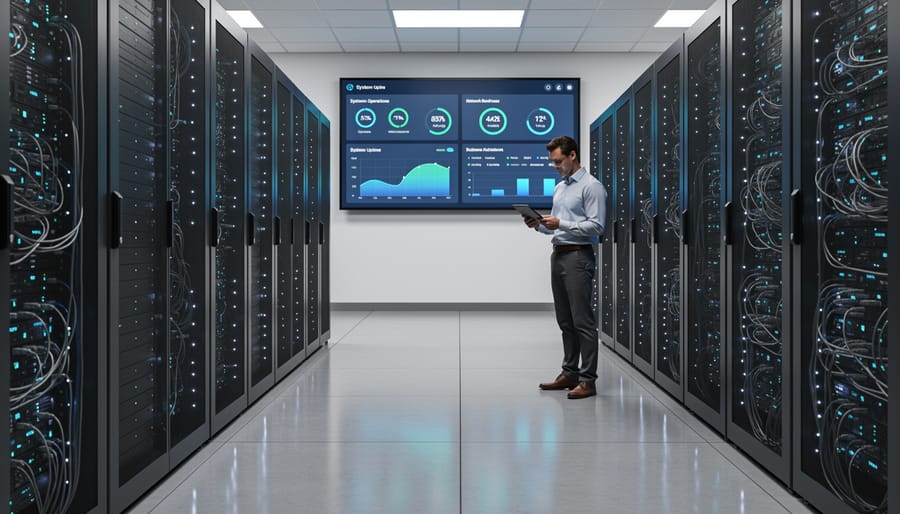
An information systems solution is a comprehensive, integrated framework that combines technology, processes, and people to collect, process, store, and distribute information across an organization. Unlike standalone software or isolated hardware purchases, a true information systems solution creates a unified ecosystem where every component works in concert to support business operations and strategic goals.
Think of it as the central nervous system of your business. Just as your body relies on coordinated signals between brain, nerves, and organs, a modern organization depends on seamless information flow between departments, systems, and stakeholders. This integration transforms disconnected tools into a cohesive platform that drives efficiency and informed decision-making.
At its core, an effective information systems solution consists of several interconnected elements:
- Hardware Infrastructure
- The physical foundation including servers, workstations, storage devices, and networking equipment that forms the tangible backbone of your system.
- Software Applications
- Specialized programs and platforms that handle specific business functions, from accounting and inventory management to customer relationship management and analytics.
- Network Architecture
- The structured framework of connections, protocols, and communication pathways that enable data exchange between all system components.
- Data Management
- The databases, storage systems, and governance policies that ensure information is organized, accessible, secure, and reliable across the organization.
- Human Resources
- The trained personnel who operate, maintain, and leverage the system, from end users to IT administrators who keep everything running smoothly.
The distinction between off-the-shelf products and integrated custom solutions matters significantly. Packaged software might solve one department’s needs, but a properly integrated solution addresses how marketing, sales, operations, and finance share critical data in real time. Custom integration ensures your systems speak the same language, eliminating redundant data entry, reducing errors, and providing the complete visibility that drives better business outcomes.
The Business Problems Information Systems Solutions Solve
Data Silos and Communication Breakdown
When your sales team can’t see updated inventory data, or your finance department works from last week’s customer information, you’re dealing with data silos, isolated pockets of information trapped in disconnected systems. This fragmentation creates a cascade of problems: duplicate data entry, conflicting reports, and decisions based on incomplete pictures.
Consider a typical scenario in 2026: your CRM holds customer contact details, but your accounting software contains different payment terms, while your inventory system shows product availability that nobody else can access. Each department operates in its own bubble, forcing employees to chase information through email chains or spreadsheets. Critical opportunities slip through the cracks because no single system provides a complete view.
Integrated information systems solutions eliminate these barriers by creating unified data flows across departments. Instead of three separate systems requiring manual reconciliation, you get one cohesive environment where sales, operations, and finance all work from the same real-time information. The result? Faster decisions, fewer errors, and teams that actually collaborate instead of working around each other’s limitations.
Security Vulnerabilities and Compliance Risks
The threat landscape has intensified dramatically, with ransomware attacks now targeting businesses of all sizes and data breaches carrying financial penalties that can cripple small to midsize organizations. In 2026, compliance frameworks like GDPR, HIPAA, and industry-specific regulations demand documented security controls that piecemeal IT setups simply can’t deliver. A comprehensive information systems solution addresses these risks through layered security: network segmentation isolates sensitive data, automated patch management closes vulnerabilities before they’re exploited, and continuous monitoring detects anomalies in real time. Many frameworks now reference standards such as NIST SP 800-53 controls as best-practice baselines, and integrated solutions make it far easier to implement and audit these controls across your entire infrastructure. Rather than relying on disconnected antivirus software and hoping for the best, you gain centralized access controls, encrypted communications, and automated compliance reporting that prove to auditors and stakeholders that your systems are secure. The cost of a breach, downtime, legal fees, lost trust, almost always exceeds the investment in a properly secured information system.
Scalability Constraints That Limit Growth
When your business secures a major new contract or enters a fresh market, your information systems should accelerate that growth, not choke it. Yet many organizations discover too late that their technology can’t keep pace. Order volumes spike and systems crash. New locations open and data synchronization fails. Additional users strain bandwidth until performance grinds to a halt.
Fragmented systems create artificial growth ceilings. A customer database that handles 5,000 records smoothly might collapse at 50,000. Separate accounting, inventory, and CRM platforms that worked for twenty employees become unmanageable with fifty, forcing staff to spend hours reconciling conflicting data instead of serving customers. Non-integrated systems also lock you into specific vendors or geographies, making expansion expensive and technically risky.
Scalable, integrated information systems solutions remove these barriers. They grow with your business through modular architectures that add capacity without rebuilding foundations. Cloud-based components flex to accommodate seasonal demand surges or rapid hiring. Properly designed systems let you open new branches, merge acquisitions, and enter international markets without starting from scratch each time. The question isn’t whether you’ll grow, but whether your technology will let you.
Core Components of an Effective Information Systems Solution
Infrastructure Foundation: Networking and Cabling
Your information systems solution is only as reliable as the network infrastructure holding it together. Without properly designed structured cabling and networking, even the most sophisticated software becomes vulnerable to downtime, bottlenecks, and security breaches.
Structured cabling provides the physical pathways for data transmission throughout your organization. Quality Cat6 or fiber optic cabling isn’t just about speed, it’s about consistency and future-proofing. When cable runs follow industry standards with proper labeling and organization, troubleshooting takes minutes instead of hours. Poor cabling creates hidden failure points that can bring operations to a halt without warning.
Network design determines how efficiently information flows between devices, servers, and cloud services. Strategic placement of switches, routers, and wireless access points ensures coverage without dead zones while segmenting traffic for both performance and security. A well-architected network handles today’s demands and scales as your business grows, accommodating new locations, increased bandwidth needs, and emerging technologies.
Many businesses discover infrastructure weaknesses only during system failures. Proactive investment in professional networking and cabling prevents these costly disruptions and provides the stable foundation every other component of your information systems solution depends on.
Cloud Services and Data Management
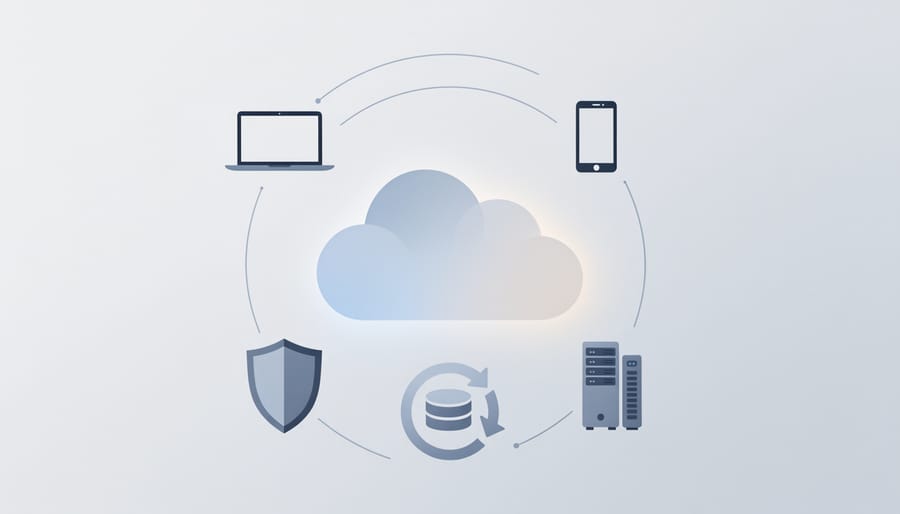
Cloud integration has become the cornerstone of modern information systems solutions, fundamentally changing how businesses manage and access their data. Unlike traditional on-premises storage that ties you to physical locations, cloud services create a distributed infrastructure that your team can access from anywhere with an internet connection.
This flexibility isn’t just convenient, it’s essential for business continuity. When your data lives in the cloud, employees can work productively from home offices, client sites, or while traveling, using the same systems and information they’d access at headquarters. You’re no longer paying for expensive hardware that depreciates immediately or scrambling to maintain backup servers in closets.
More critically, cloud-based data management provides disaster recovery capabilities that most small and mid-sized businesses couldn’t afford otherwise. Your information automatically replicates across multiple geographic locations, protecting you from hardware failures, natural disasters, or cyberattacks. If ransomware locks your local systems, you can restore clean data from cloud backups within hours rather than days or weeks.
The right cloud strategy balances public cloud services for scalability with private or hybrid solutions for sensitive data, creating a flexible architecture that grows with your business while maintaining security and compliance standards your industry demands.
Communication Systems Integration
Modern businesses run on communication, and fragmented systems, separate platforms for voice calls, video meetings, instant messaging, and email, create bottlenecks that slow decision-making and frustrate teams. Communication systems integration solves this by unifying these channels into a cohesive platform where information flows naturally between departments, remote workers, and clients.
A well-integrated communication system connects your telephony infrastructure with collaboration tools, customer relationship management software, and other business applications. When a client calls, the system automatically pulls up their account history. Team members can switch from a chat to a video call without changing applications. Call logs, voicemails, and meeting recordings feed directly into project management systems where they’re searchable and actionable.
This integration isn’t just about convenience. In 2026’s hybrid work environment, it’s essential infrastructure. Sales teams need instant access to product specialists during customer calls. Support staff require seamless handoffs between phone, chat, and ticketing systems. Executives making time-sensitive decisions can’t waste minutes hunting through disconnected platforms.
The technical foundation matters too: reliable Voice over IP systems, properly configured network prioritization to prevent call quality issues, and integration with your existing business software. Without these elements working together, you’re paying for multiple tools that don’t multiply your team’s effectiveness.
How to Select the Right Information Systems Solution for Your Business
Assess Your Current Technology Landscape
Before you can select the right information systems solution, you need a clear picture of where you stand. Start with a systematic inventory of your current technology: list every software application, hardware device, network component, and data storage system your business relies on. Don’t just focus on the obvious enterprise tools, include departmental spreadsheets, shadow IT solutions, and workarounds employees have created.
Next, map how information actually flows through your organization. Where do manual handoffs occur? Which systems don’t talk to each other? Document every instance where staff re-enter data, email files instead of sharing centrally, or maintain separate records in different departments.
Interview stakeholders across departments to understand their daily frustrations. The accounts team struggling with invoice processing and the operations manager fighting inventory discrepancies are both revealing system gaps that matter.
Finally, translate these findings into specific requirements. Instead of “we need better software,” define measurable needs: “real-time inventory visibility across three locations” or “automated customer data sync between sales and support systems.” This clarity becomes your foundation for evaluating potential solutions.
Prioritize Integration and Customization
The true power of an information systems solution lies not in its individual components but in how seamlessly those components work together. A top-tier email server means little if it can’t communicate with your CRM, and robust networking infrastructure loses value when it operates in isolation from your cloud services.
Integration eliminates the manual workarounds, duplicate data entry, and workflow bottlenecks that plague businesses using disconnected systems. When your telephony, cloud services, and data management tools function as a unified whole, information flows naturally where it’s needed, without human intervention creating delays or errors.
One-size-fits-all packages force your business processes to conform to software limitations rather than the other way around. Every organization has unique workflows, compliance requirements, and growth trajectories. A customized approach adapts the technology to your specific needs, whether you’re a small business managing five locations or a growing enterprise coordinating multiple departments.
The investment in tailored integration pays dividends through improved productivity, reduced error rates, and the ability to scale without replacing your entire infrastructure. Your information system should support how you actually work, not force you into generic templates designed for maximum market appeal.
Evaluate Support and Long-Term Partnership
Even the most sophisticated information systems solution is only as reliable as the support infrastructure behind it. When systems fail at 2 AM or a security patch needs immediate deployment, you can’t wait until business hours for a response. This reality makes 24/7 technical support non-negotiable for businesses that depend on continuous operations.
Look beyond the initial implementation when evaluating providers. Ask detailed questions: What’s their average response time for critical issues? Do they offer proactive monitoring to catch problems before they disrupt operations? How do they handle system updates and patches? A provider committed to long-term partnership will assign dedicated account managers who understand your specific environment, not route every call through a generic help desk.
The true value emerges over years, not months. Technology evolves rapidly, and your business needs will shift. Choose a partner who treats your success as their success, one who proactively recommends upgrades, anticipates capacity requirements, and adapts solutions as you grow. This approach transforms IT support from a necessary expense into a competitive advantage that protects your investment and scales with your ambitions.

Common Mistakes to Avoid When Implementing Information Systems Solutions
Even the most thoughtfully selected information systems solution can fail if implementation goes wrong. Businesses that rush deployment or cut corners on planning often end up with expensive systems that don’t deliver on their promise. Here are the critical mistakes to watch for.
Underestimating Integration Complexity
Many organizations assume that connecting new systems to existing infrastructure will be straightforward. In reality, legacy systems, incompatible data formats, and undocumented customizations create unexpected obstacles. What looks like a three-month project on paper can stretch to six or nine months when integration challenges surface. Smart businesses allocate extra time and budget for the discovery phase, where technical teams map all dependencies and potential conflicts before committing to timelines.
Skipping User Training and Change Management
Technical implementation is only half the battle. A powerful information systems solution becomes worthless if employees don’t know how to use it or actively resist the change. Companies that treat training as an afterthought see poor adoption rates, workflow disruptions, and frustrated staff who revert to old methods. Effective implementations include role-specific training, clear documentation, and designated champions within each department who can answer questions and encourage adoption.
Neglecting Data Migration Planning
Transferring years of business data from old systems to new ones carries significant risk. Incomplete migrations leave gaps in customer records, financial histories, or operational data. Corrupted transfers can introduce errors that compound over time. Organizations need detailed migration plans that include data cleaning, validation testing, and rollback procedures in case something goes wrong. Running parallel systems during transition, though resource-intensive, provides a safety net.
Failing to Define Success Metrics
Without clear benchmarks, you can’t measure whether your information systems solution is working. Businesses that skip this step have no objective way to evaluate performance improvements or justify the investment. Before implementation begins, establish specific, measurable goals: reduced response times, fewer security incidents, improved customer satisfaction scores, or lower operational costs. Track these metrics consistently to prove ROI and identify areas needing adjustment.
Choosing an information systems solution isn’t just another line item in your IT budget. It’s a strategic investment that determines whether your business can adapt to market changes, protect sensitive data, and scale operations without grinding to a halt. The right solution doesn’t just keep your systems running. It creates a foundation for sustainable growth and competitive advantage.
Throughout this guide, we’ve explored how integrated information systems solve real business problems: breaking down data silos, closing security gaps, and removing the scalability constraints that prevent expansion. We’ve examined the core components that make these solutions work, from structured cabling to cloud integration and unified communications. Most importantly, we’ve outlined a practical framework for selecting a solution that fits your specific needs rather than forcing your business to adapt to a generic package.
The businesses that thrive in 2026 are those that view their information systems as living infrastructure requiring ongoing attention, not one-time purchases. They recognize that technology evolves, threats emerge, and growth creates new demands. That’s why the provider you choose matters as much as the solution itself.
Stream It specializes in building customized information systems solutions tailored to your business, backed by 24/7 support and a commitment to long-term partnerships. Whether you’re struggling with outdated infrastructure or planning for expansion, we’ll help you design a solution that addresses your unique challenges. Take a hard look at your current systems. If you’re facing any of the issues we’ve discussed, reach out for a consultation. Let’s build something that actually works for you.