
In a business environment where no organization can master every capability in-house, global business alliances offer a practical path to growth, market expansion, and shared innovation. These strategic partnerships connect companies across borders to pool resources, share risk, and access new markets or technologies neither could reach alone. For IT decision-makers and business leaders evaluating whether such an alliance makes sense for their organization, the answer depends on three factors: strategic fit, complementary capabilities, and a clear mutual value proposition.
A global business alliance is fundamentally different from a vendor relationship or merger. It’s a structured, long-term partnership between independent organizations that agree to collaborate on specific goals while maintaining their separate identities. These alliances can take many forms: joint ventures to enter emerging markets, technology-sharing agreements to accelerate product development, or distribution partnerships that combine one company’s product with another’s market reach. Success hinges on alignment around shared objectives and a commitment to transparency, flexibility, and ongoing communication.
The stakes are high. Well-executed alliances unlock access to new customer bases, reduce time-to-market for innovative solutions, and distribute the financial burden of major initiatives. Poorly structured partnerships drain resources, create legal complications, and damage both brands. That’s why understanding the eligibility criteria, the process for building these relationships, and the rights and obligations each party brings to the table is critical before committing to any agreement.
This guide walks you through what defines a viable global business alliance, how to determine if your organization is ready, the steps to establish and govern the partnership, and where to find expert support throughout the process.
What Global Business Alliances Are

A global business alliance in the IT solutions sector represents a strategic, formalized partnership between organizations that extends far beyond basic transactional relationships. Unlike a simple vendor contract where you purchase products or services on demand, these alliances involve shared objectives, integrated operations, and mutual investment in long-term success. When an IT solutions provider like Stream It forms a global alliance with a telecommunications carrier or cloud platform provider, both parties commit to joint planning, coordinated service delivery, and continuous collaboration that benefits their shared client base.
The defining characteristic is interdependence. In a vendor relationship, you might buy hardware from a manufacturer and move on. In a global alliance, that same manufacturer becomes a strategic partner who provides early access to new technology, dedicates technical resources to joint projects, and collaborates on customized solutions for complex client needs. The relationship creates value neither party could generate alone.
These partnerships operate across multiple dimensions simultaneously. A comprehensive global alliance in IT might encompass technology licensing agreements, joint marketing initiatives, co-developed solutions, shared support infrastructure, and revenue-sharing models. For instance, an alliance between a computer security firm and a telecommunications provider could involve bundling security services into network packages, cross-training support teams to deliver seamless 24/7 assistance, and collaborating on threat intelligence that strengthens both organizations’ offerings.
The multi-layered nature means these alliances require significant upfront investment, careful alignment of business objectives, and ongoing governance. However, they enable IT solutions providers to deliver comprehensive, integrated services that would be impossible through isolated vendor relationships. A client working with a well-connected solutions provider gains access to an entire ecosystem of validated, coordinated partners rather than managing fragmented relationships themselves.
Who Qualifies for Strategic Alliance Partnerships

Requirements for IT Solutions Providers
IT solutions providers in computer security, telecommunications, and hardware integration must demonstrate technical excellence and operational maturity to qualify as alliance partners. Most global vendors require ISO 27001 certification or equivalent security frameworks, proof of technical certifications from manufacturers (such as Cisco, Microsoft, or VMware partner tiers), and documented project delivery experience across multiple client environments.
Financial stability matters significantly. Prospective alliance partners typically need three years of audited financial statements showing consistent revenue growth and positive cash flow. Many global alliances require professional liability insurance coverage starting at £2 million and errors-and-omissions policies protecting against service failures.
Service delivery infrastructure proves critical. Partners must operate 24/7 support capabilities with documented response time protocols, maintain geographically distributed technical teams, and demonstrate scalable service delivery models. Companies seeking alliances need established remote monitoring systems, ticketing platforms integrating with partner tools, and proven escalation procedures.
The human element counts too. Alliance candidates should employ certified engineers holding current credentials in relevant technologies, invest in ongoing staff training programs, and maintain low employee turnover rates that ensure client continuity. Cultural alignment around client service philosophy often determines whether technical qualifications translate into successful partnerships.
Mutual Value Assessment
Before two organizations formalize a global alliance, they must conduct rigorous mutual value assessment to ensure genuine strategic alignment. This evaluation goes far beyond surface-level capabilities and examines whether the partnership will create compounding benefits over time.
Both parties analyze complementary strengths by mapping their respective service portfolios, technical expertise, and geographic coverage against market gaps and client needs. An IT security provider might partner with a telecommunications carrier specifically because their combined offering addresses enterprise clients’ desire for integrated network protection, something neither delivers alone.
Market positioning analysis reveals whether the alliance expands reach or creates conflicts. Partners examine their existing client bases, target industries, and competitive positioning to confirm they’re entering adjacent rather than overlapping territories. A hardware integration specialist serving financial services and a cloud solutions provider focused on healthcare can combine forces without cannibalizing each other’s pipeline.
Cultural alignment often determines success more than technical compatibility. Organizations evaluate decision-making processes, support philosophies, and client relationship approaches through working sessions and pilot projects before full commitment. Mismatched service standards or conflicting business ethics undermine even the most technically sound partnerships, making this qualitative assessment essential for building alliances that endure.
How to Build and Formalize a Global Alliance
The Discovery and Outreach Phase
Finding the right alliance partner starts with knowing exactly what gaps your organization needs to fill and what unique value you bring to the table. Begin by mapping your current service portfolio against client demands you can’t fully meet alone, whether that’s cloud infrastructure depth, specialized security certifications, or geographic coverage.
Industry conferences and technology vendor partner programs offer direct access to potential allies already operating in your ecosystem. Attend quarterly business reviews with your existing vendors; they often connect complementary providers who serve different market segments but share technical standards.
LinkedIn research reveals which companies consistently deliver in your target areas. Look beyond their marketing materials to examine case studies, client retention patterns, and employee commentary about their operational culture. A partner with high turnover or inconsistent service delivery will undermine your reputation, regardless of their technical capabilities.
Request informal discovery calls before formal proposals. These conversations surface compatibility issues early, differing approaches to client ownership, support responsiveness expectations, or pricing philosophy can derail partnerships that look perfect on paper. Ask specific questions about their 24/7 support infrastructure and escalation processes, not just whether they offer round-the-clock availability.
Negotiation and Agreement Framework
Successful alliance agreements balance structure with adaptability. Start by documenting each party’s core responsibilities in specific, measurable terms, who owns client relationships, who provides first-line versus escalated support, and which partner manages billing and invoicing. Avoid vague language like “collaborate on technical issues.” Instead, specify that Partner A handles initial troubleshooting within two hours while Partner B provides specialist escalation for complex infrastructure problems.
Revenue sharing requires transparent formulas tied to actual effort and value delivery. Common models include percentage splits based on who sourced the client (70/30 for the originating partner is typical), tiered structures where margins adjust based on deal size, or hybrid approaches combining flat referral fees with ongoing revenue percentages. Document how expenses get allocated, particularly for joint marketing campaigns or shared technical resources that support the alliance.
Performance metrics should reflect both operational excellence and strategic growth. Define service level commitments (response times, resolution rates, uptime guarantees), client satisfaction thresholds measured through consistent survey methods, and growth targets such as joint revenue goals or new market penetration. Establish how you’ll track these metrics, monthly reporting, quarterly business reviews, or real-time dashboards, and what happens when either party underperforms. Include escalation procedures before reaching termination, giving both sides chances to course-correct and preserve the relationship.
Implementation and Integration
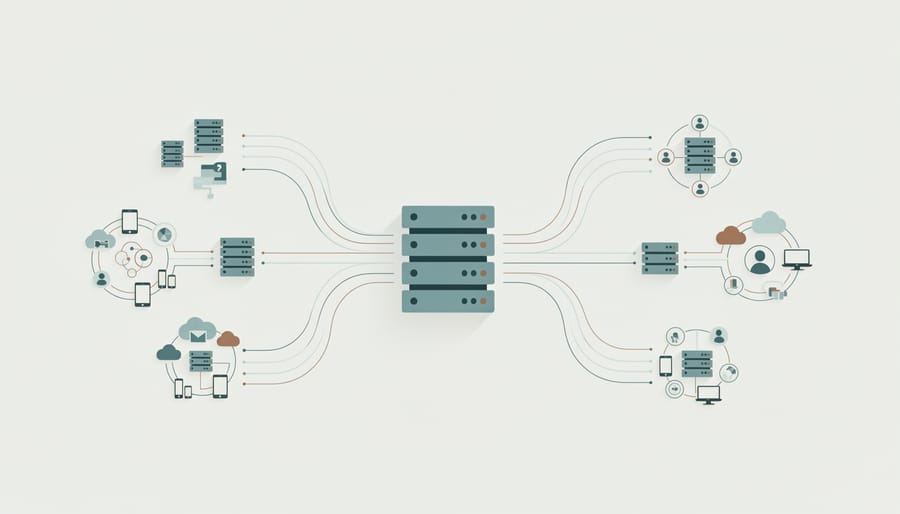
Once agreements are signed, the real work begins: transforming contractual commitments into operational reality. Start with technical integration, connecting systems, platforms, and workflows so both partners can deliver seamless solutions to clients. This might involve API integrations, shared ticketing systems, or unified monitoring dashboards that enable real-time collaboration.
Parallel to technical setup, invest in comprehensive team training. Your staff needs to understand the partner’s technologies, support processes, and escalation procedures. Joint training sessions build familiarity and trust between teams who will collaborate daily.
Launch coordinated marketing initiatives early. Co-branded materials, joint case studies, and aligned messaging demonstrate a unified front to clients and the market. These efforts multiply reach while reinforcing the partnership’s value proposition.
Establish 24/7 support coordination from day one. Define handoff protocols, create shared knowledge bases, and set clear communication channels for urgent issues. Clients expect consistent service regardless of which partner organization they contact, so synchronized support structures are non-negotiable for maintaining service excellence across time zones and technical domains.
Rights, Obligations, and Governance

Performance Standards and Accountability
Performance standards and accountability mechanisms prevent alliances from drifting into complacency or misalignment. Effective partnerships establish clear, measurable metrics from the outset, response times for technical support, resolution rates for security incidents, uptime percentages for telecommunications services, and client satisfaction scores. These aren’t aspirational targets but contractual commitments tracked through shared dashboards both parties monitor in real time.
Regular review cycles, typically quarterly, bring alliance leaders together to assess performance against benchmarks, address emerging issues before they escalate, and recalibrate priorities as market conditions shift. These sessions examine not just what went wrong but what’s working exceptionally well, creating a culture where partners learn from each other’s strengths rather than simply policing failures.
Continuous improvement frameworks embed accountability into daily operations. When Stream It partners with global technology vendors, we establish joint working groups that tackle systemic challenges, whether that’s streamlining hardware procurement, refining security protocols, or enhancing 24/7 support handoffs between time zones. This ongoing collaboration transforms static agreements into dynamic relationships that adapt to client needs and technological evolution, ensuring the alliance delivers compounding value rather than gradual degradation.
Exit Provisions and Transition Planning
Even the strongest alliances sometimes reach a natural endpoint due to market shifts, strategic pivots, or changing business priorities. Well-structured exit provisions protect both parties and preserve professional relationships for potential future collaboration.
Termination Rights
Most alliance agreements specify termination conditions: for convenience (typically requiring 90 to 180 days’ notice), for cause (breach of contract or performance failures), or upon change of control events like mergers. Clear notice periods allow both organizations to plan client transitions without service disruptions.
Client Transition Obligations
The departing partner must maintain service levels throughout the notice period, document all active client engagements, transfer technical knowledge, and coordinate handoffs to ensure continuity. For Stream It’s 24/7 support commitments, this means arranging seamless coverage transfers so clients experience no service gaps.
Relationship Preservation
Professional exits maintain industry reputation and keep doors open. Fulfilling transition obligations completely, communicating transparently with affected clients, and avoiding public criticism demonstrate integrity that partners and clients remember. Many IT professionals reconnect years later in different ventures, treating endings respectfully builds long-term career capital beyond any single alliance.
Where to Get Support and Resources
Building and managing global business alliances requires specialized knowledge and support infrastructure that most IT solutions providers can’t maintain in-house. Knowing where to turn for expert guidance can mean the difference between a partnership that delivers compounding value and one that stalls in negotiation or underperforms after launch.
Technology vendors themselves offer the most direct path to alliance support. Major platforms like Microsoft, Cisco, Dell Technologies, and AWS operate formal partner programs with dedicated alliance development teams. These programs provide relationship managers who guide you through certification requirements, help structure joint go-to-market strategies, and connect you with complementary partners in their ecosystems. Most also maintain partner portals with templates, best practices, and case studies from successful alliances.
For partnerships requiring complex legal frameworks, engage attorneys who specialize in strategic technology alliances rather than general business lawyers. These specialists understand intellectual property licensing in software and hardware contexts, revenue-sharing models unique to IT services, service level agreement structures, and how to draft termination clauses that protect both parties while preserving the option to collaborate again. The International Association for Contract & Commercial Management maintains directories of qualified professionals.
Multiple resource types can accelerate your alliance-building efforts:
- Vendor alliance programs offering certification tracks, co-marketing funds, and technical integration support
- Industry consortiums like the Technology Services Industry Association connecting IT solutions providers with potential partners
- Legal specialists in technology partnerships who draft agreements aligned with sector norms
- Business development consultants experienced in computer security, telecommunications, and hardware alliance structures
- Peer networks and roundtables where IT leaders share real-world alliance management strategies
Don’t overlook the value of informal peer networks. Regional IT solution provider associations and online communities like Spiceworks or TechRepublic forums host discussions where practitioners share what worked, what didn’t, and which alliance partners deliver genuine support versus those offering only marketing relationships. These candid exchanges often reveal practical realities that polished vendor materials gloss over.
Benefits of Long-Lasting Alliance Relationships
Enduring global business alliances create compounding returns that far exceed the benefits of transactional vendor relationships. When technology partnerships mature beyond the initial contract phase, both parties develop institutional knowledge of each other’s systems, processes, and capabilities. This depth of understanding enables faster problem resolution, more precise solution design, and smoother implementation across client engagements.
Technical integration deepens significantly over time. Alliance partners who have worked together for years often develop custom APIs, shared dashboards, and synchronized monitoring systems that streamline service delivery. In computer security implementations, for instance, long-standing partnerships between solutions providers and security vendors can mean pre-configured threat intelligence sharing, automated patch management coordination, and joint incident response protocols that simply don’t exist in newer relationships.
Service capabilities expand through collaborative innovation. Partners invested in a long-term relationship actively share roadmaps, beta-test emerging technologies together, and co-develop solutions for specific market segments. A telecommunications provider allied with a hardware manufacturer for several years might gain early access to next-generation networking equipment, enabling them to offer clients cutting-edge infrastructure before competitors even know it exists.
Preferential support access represents another tangible benefit. Alliance partners typically receive dedicated account teams, priority escalation channels, and direct lines to engineering resources. When your client faces a critical system failure at 2 a.m., a long-standing alliance with your technology vendor can mean reaching a solutions architect in minutes rather than navigating standard support queues. This 24/7 responsiveness translates directly into client satisfaction and retention.
Client trust builds through demonstrated partnership stability. Organizations evaluating IT solutions providers increasingly scrutinize partner ecosystems. A five-year alliance with major cloud platforms, security vendors, or hardware manufacturers signals reliability and staying power that contract lists cannot convey.
How do alliance partners adapt when technology shifts make their original agreement obsolete?
Mature alliances include regular strategic reviews where partners assess market changes and adjust their collaboration scope, often expanding into new technology domains while phasing out declining ones.
What happens if client needs evolve beyond the alliance’s current capabilities?
Strong partnerships use client feedback as innovation drivers, jointly developing new solutions or bringing additional alliance members into the ecosystem to address emerging requirements.
How often should alliance partners conduct formal relationship assessments?
Most successful alliances schedule quarterly business reviews and annual strategic planning sessions to maintain alignment and address any performance or market concerns proactively.
The revenue model itself improves with alliance longevity. Long-term partners often negotiate better pricing structures, volume discounts, and revenue-sharing arrangements that reflect their track record. These economics allow solutions providers to offer more competitive client pricing while maintaining healthy margins, creating a virtuous cycle of growth for both alliance members.
How to Apply or Complete the Process
Building a global business alliance isn’t a formal application you submit to a central authority, it’s a negotiated partnership between independent companies. However, there are concrete steps to complete once you’ve identified a potential partner and reached initial agreement.
Start by formalizing your intent through a non-disclosure agreement before sharing sensitive business information, client lists, or proprietary systems details. Next, conduct mutual due diligence: exchange financial statements, insurance certificates, client references, and technical certifications that verify your capabilities.
Draft a detailed partnership agreement with legal counsel experienced in business alliances. This document should specify each party’s roles, territory rights, revenue splits, support obligations, and performance standards. Don’t rush this stage, ambiguity here causes conflicts later.
Complete any required vendor registrations or certifications your partner mandates. Technology providers often require formal enrollment in their partner programs, completion of training modules, and technical assessments before you can resell or support their solutions.
Finally, establish the operational framework: set up shared communication channels, integrate your systems for client handoffs, align your 24/7 support protocols, and schedule regular governance meetings. The alliance becomes real through these working connections, not just signed contracts.
Where to Get Official Help
Finding the right support for building global business alliances depends on your specific needs and industry focus. Start with your existing technology vendors, major providers like Microsoft, Cisco, Dell, and HP maintain formal partner programs with dedicated alliance teams who can guide you through their specific frameworks and requirements.
Industry associations offer valuable resources and networking opportunities. The Technology Services Industry Association (TSIA) and local chambers of commerce with international business divisions provide alliance-building workshops, templates, and peer connections. For IT solutions providers, regional technology councils often maintain directories of potential partners.
Legal expertise is essential for structuring solid agreements. Seek attorneys who specialize in technology partnerships and international business law, they’ll ensure your contracts protect both parties while enabling productive collaboration.
If you’re evaluating whether an alliance makes sense for your organization, consult with business advisors who understand your market. Stream It, for example, offers personalized consultations to help companies assess their partnership readiness and determine which alliances will strengthen their service delivery capabilities. Our 24/7 support team can discuss how strategic partnerships might enhance your technology infrastructure and client satisfaction.
Global business alliances aren’t built overnight, and they certainly don’t sustain themselves on goodwill alone. The partnerships that deliver real value, expanded capabilities, stronger client solutions, and lasting competitive advantages, are those grounded in strategic planning, mutual accountability, and active governance. For IT solutions providers, these alliances transform what you can offer clients, from integrated security and telecommunications to comprehensive hardware solutions backed by world-class support.
If you’re evaluating your current partnership strategy or considering new alliance opportunities, ask yourself: Are these relationships positioned for long-term success? Do they align with your service standards and business goals?
At Stream It, we’ve built our business on enduring partnerships that prioritize client outcomes above all else. Our alliances with leading technology providers enable us to deliver customized solutions tailored to your specific needs, not generic packages. And because we understand that technology challenges don’t respect business hours, we provide 24/7 support to ensure your systems stay operational when it matters most.
Ready to explore how strategic alliances can strengthen your technology infrastructure? Let’s talk about building a partnership that works for you.